5 Hidden Features of the Msi Raider A18 Hx You Must Know About
Introduction
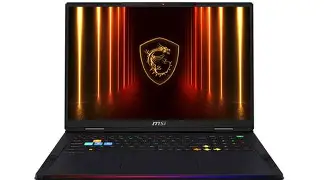
The MSI Raider A18 Hx targets high-end gamers and power users who expect desktop-class performance in a portable chassis. While headline specs — CPU, GPU, RAM, and display — dominate most spec sheets, the Raider A18 Hx includes several lesser-known capabilities that meaningfully affect daily use: performance behavior, thermal tuning, upgrade paths, display control, and software-driven workflows. These "hidden" features can change whether the laptop is merely fast or whether it feels polished, usable, and future-proof for a buyer's real-world needs.
This article walks through five of the most useful but often overlooked features of the Raider A18 Hx, explains practical use cases, and highlights what buyers typically care about when comparing premium 18-inch gaming laptops. The goal is to help buyers get more from their system — whether for competitive gaming, creative work, or heavy multitasking.
Feature 1 — The Physical Performance Toggle (Turbo/OC Button)
One of the Raider A18 Hx's most immediately useful but underappreciated features is a physical performance toggle on the chassis that switches between power profiles (often labeled "Turbo" or "OC"). Instead of navigating software menus, this hardware button instantly changes voltage/power limits and fan behavior to favor either maximum sustained performance or quieter, more conservative operation.
Real-world use cases
- Competitive gaming sessions where low frame-time variance matters: switching to Turbo before a match reduces latency spikes and ensures the GPU/CPU operate at higher sustained clocks.
- Travel or conference use where battery life and quiet operation are priorities: toggling back to Silent or Balanced modes preserves battery and reduces fan noise in shared spaces.
- On-the-fly benchmarking or stress testing: toggling the button provides instant comparison between power states without rebooting or re-applying software profiles.
Buyers typically care about convenience and repeatability. The physical toggle removes friction and makes performance tuning accessible to less technical users while still offering a tool that advanced users will appreciate for quick checks or live adjustments.
Feature 2 — Discrete GPU Direct Mode (MUX / Advanced Optimus)
Many modern gaming laptops hide a subtle performance trade-off: an integrated GPU often sits between the CPU and the discrete GPU, routing frames through the iGPU before they reach the display. The Raider A18 Hx commonly offers a MUX switch or uses Advanced Optimus-like routing to allow the discrete GPU to drive the panel directly. When enabled, this reduces latency and can increase raw frame rates — a valuable advantage in competitive games.
Real-world use cases
- Esports titles (e.g., CS:GO, VALORANT): direct GPU routing reduces latency and frame pacing inconsistencies, improving responsiveness for keen players.
- High-refresh displays: to fully utilize 240Hz+ panels, cutting out the iGPU path ensures smoother frame delivery.
- Battery-sensitive workflows: toggling back to integrated-driven mode improves battery life for web browsing or office work when maximum GPU performance is unnecessary.
Buyers concerned with input latency, esports performance, or precise frame delivery should confirm whether the specific Raider A18 Hx configuration supports MUX switching and how the manufacturer exposes that option (BIOS, MSI Center, or automatic switching).
Feature 3 — Deep Lighting and Macro Integration via MSI Center / SteelSeries
Per-key RGB keyboards are common, but the Raider A18 Hx's deeper integration with MSI Center and SteelSeries Engine unlocks automation and context-aware lighting that goes beyond aesthetics. Profiles can switch based on active applications or games; macros and key remaps can be stored in the keyboard's onboard memory in some models; and lighting can be coordinated with system events (e.g., thermal warnings, battery level, or incoming VoIP notifications).
Discover deals on Laptops & Computers — updated daily.
Browse Now →Real-world use cases
- Streamers and content creators: scene-specific macros (e.g., switching OBS scenes, toggling mic mute) can be triggered by single keypresses and visually confirmed by the keyboard lighting.
- Multitaskers: distinct lighting profiles for development, editing, and gaming help users immediately identify the active workflow.
- Accessibility and ergonomics: custom keymaps and macro sequences reduce repetitive motions for long creative sessions.
Buyers who value customization and productivity will appreciate the combination of per-key lighting and macro storage. It turns the keyboard into an extensible control surface rather than just an input device.
Feature 4 — Dual NVMe Slots and Upgrade Flexibility
Under the Raider A18 Hx's bottom access panel, many configurations include two (or more) M.2 NVMe slots and easily accessible SO-DIMM slots for RAM. Beyond simple expansion, some SKUs support hardware RAID configurations or allow the second slot to function as a dedicated scratch disk. The practical upshot is that the laptop can evolve with a user's needs — from a fast system drive plus a large-capacity secondary drive to a multi-drive setup for video editing workflows.
Real-world use cases
- Video editors and photographers: keep the OS and apps on a high-performance NVMe drive while using a second NVMe as a scratch disk for timelines and cache files.
- Gamers with large libraries: pair a smaller fast drive for the OS and a larger second drive for games to balance speed and capacity.
- Long-term ownership: the ability to add RAM and storage makes the Raider A18 Hx less likely to feel outdated as projects grow more demanding.
Buyers who prioritize upgradeability should confirm the exact slot count and whether the model uses accessible screws and standard components. Ease of access and a straightforward upgrade path improve the laptop's total cost of ownership.
Feature 5 — Advanced Thermal Tuning: Fan Curves, CoolBoost, and BIOS Controls
Beyond raw cooling hardware, the Raider A18 Hx exposes nuanced thermal controls to users: custom fan curves in MSI Center, a dedicated "Cooler Boost" mode that forces fans to maximum, and BIOS-level settings for power limits and thermal targets. These controls allow the system to be tuned for quiet operation, maximum sustained performance, or anything in between.
Real-world use cases
- Long workdays with mixed loads: create a balanced profile that keeps temperatures reasonable for content creation without resorting to full-blast fans.
- Extended gaming marathons: shift to an aggressive thermal profile that sustains higher clocks for longer periods, trading noise for performance.
- Workshop validation and maintenance: technicians and enthusiasts can monitor thermal performance, clean intakes, and adjust curves to sustain optimal thermals over the machine's life.
Buyers who care about noise, longevity, and peak performance should test or verify the available thermal profiles and whether BIOS updates or fan control utilities are actively maintained by the vendor.
Pros & Cons
- Pros
- Instant performance switching via physical Turbo/OC button improves usability for mixed workloads.
- Discrete GPU direct mode (MUX/Advanced Optimus) reduces latency and can boost frame rates in competitive play.
- Deep keyboard customization and macro integration help streamers and multitaskers work more efficiently.
- Upgrade-friendly layout with multiple NVMe slots and accessible RAM slots extends practical lifespan.
- Comprehensive thermal controls empower users to trade noise for performance on demand.
- Cons
- High-performance modes increase noise and heat; users in quiet environments may need to revert to balanced profiles.
- Configuration variability: not every SKU includes every hidden feature, so buyers must verify the exact configuration before purchase.
- Large 18-inch chassis increases weight and reduces portability versus 15–16 inch alternatives.
- Battery life in high-power modes is limited; heavy users must accept tethered use for maximum performance.
Comparison Table — How the Raider A18 Hx Stacks Up
| Model | MUX / Direct GPU | Hardware Performance Toggle | Per-key RGB & Macros | Upgradeability (NVMe / RAM) | Typical Target User |
|---|---|---|---|---|---|
| MSI Raider A18 Hx | Often available | Yes — physical Turbo/OC button | Yes — MSI Center / SteelSeries integration | Good — multiple NVMe slots, accessible RAM | Competitive gamers, creators who want upgrade paths |
| Razer Blade 18 | Available on some configs | Software-based profiles | Yes — Razer Chroma (fewer onboard macro options) | Limited — some models solder RAM, fewer bays | Design-conscious users who prioritize compactness |
| ASUS ROG Strix / Scar 18 | Often available | Hardware or quick-access keys on many models | Yes — Armoury Crate + per-key RGB | Good — built for upgrades in many SKUs | Competitive gamers who want high-refresh displays and tuning |
Buying Guide: What Matters Most When Choosing a Raider A18 Hx
When evaluating the Raider A18 Hx, buyers face two overlapping decisions: baseline hardware (CPU, GPU, display) and configuration-level features (MUX, physical OC button, storage layout). The following checklist helps prioritize choices by use case.
1. Define the primary use case
Competitive gaming — prioritize models with MUX/direct-GPU, higher-refresh displays (240Hz+), and a robust keyboard. The physical Turbo button and aggressive cooling profiles are valuable.
Content creation — favor larger SSD capacity, dual NVMe slots, and ample RAM (32GB+). Thermal headroom and long sustained performance matter more than peak FPS numbers.
Portable power — if mobility is important, check weight and battery configurations; consider whether a slightly smaller chassis might offer better battery life while still delivering acceptable performance.
Shop the latest Laptops & Computers picks on Amazon.
Browse Now →2. Check the exact configuration for hidden features
- Confirm whether the chosen SKU includes a MUX switch / Advanced Optimus and how it is toggled.
- Verify the presence of a hardware Turbo/OC button if instant profile switching matters.
- Inspect the specs or service manual to confirm the number of NVMe slots and whether RAM is user-upgradeable.
3. Evaluate thermal and acoustic behavior
Look for reviews that measure sustained clocks and fan noise under load. MSI's thermal modes are useful only if they provide meaningful differences in temperature and noise; independent testing can reveal whether the laptop maintains high clocks for long workloads.
4. Prioritize display characteristics for the intended task
- Gaming-only buyers should prefer high refresh rates and low response times.
- Color-critical creators should seek high gamut coverage and factory calibration tools (e.g., True Color) available in MSI software.
- Adaptive sync and direct-GPU support improve perceived smoothness across workloads.
5. Consider long-term ownership and upgrades
Models with accessible panels, standard M.2 slots, and SO-DIMM RAM are easier and cheaper to keep up-to-date. If warranty terms permit self-service upgrades, confirm whether MSI requires service authorization to maintain coverage.
6. Software and firmware maintenance
MSI Center and firmware updates materially affect the hidden features discussed above. Buyers should check the vendor's update cadence and read user reports on whether MSI Center reliably applies profiles and updates BIOSes without issues.
Practical Tips for Getting the Most from These Features
- Before adjusting thermal curves, monitor baseline temps and behavior with a stress test. Make incremental changes and document settings that provide the best balance of noise and performance.
- If the keyboard supports onboard macro storage, save frequently used macros to the keyboard itself so they persist across OS reinstalls.
- When adding NVMe storage, use a calibrated cloning workflow or fresh OS install to avoid leftover configuration problems; use the second drive as a project scratch disk for best results in video work.
- Keep MSI Center and BIOS firmware up to date, but avoid applying updates mid-project without backups; some updates change thermal and power behavior noticeably.
- Test MUX/direct-GPU mode in the titles that matter: some games and engines benefit more than others, and switching modes can have regressions in a few edge cases.
Conclusion
The MSI Raider A18 Hx is more than a spec sheet: its real strength lies in subtle, user-facing features that affect everyday experience. The hardware Turbo button, direct-GPU routing, deep keyboard integrations, flexible storage options, and fine-grained thermal controls make the laptop adaptable to many workflows, from high-stakes esports to long-form video editing. Buyers who investigate the exact SKU and experiment with these features will find that the Raider A18 Hx can be tuned to deliver both peak performance and refined usability.
Ultimately, the hidden features discussed here are what turn raw horsepower into a practical tool. Verifying their presence in the chosen configuration and learning to use them effectively will help buyers get the most value and longevity out of an investment in a high-end 18-inch gaming machine.